
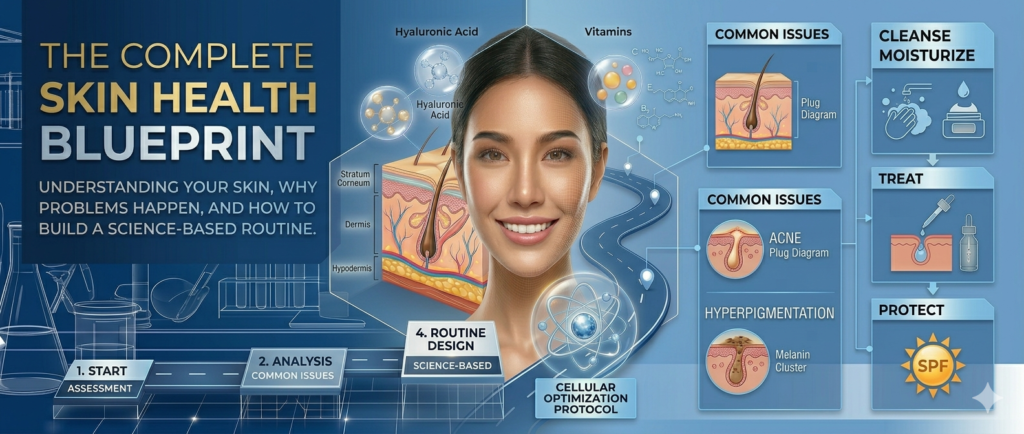
The Complete Skin Health Blueprint
Understanding your skin, why problems happen, and how to build a routine that actually works.
Affiliate Disclosure: This post may contain affiliate links. We may earn a small commission at no extra cost to you.
📋 What’s Inside
Understanding Your Skin
Healthy skin is not created by buying more products. True skin barrier repair and lasting skin health begin with understanding how your skin functions, what causes problems, and which ingredients actually support your skin’s natural processes.
Your skin is your body’s largest organ — protecting you from environmental damage, controlling moisture levels, regulating temperature, and acting as a defense system against outside threats.
- Understanding your skin structure and needs
- Protecting and repairing your skin barrier
- Choosing ingredients based on evidence, not marketing claims
The Foundation of Skin Health
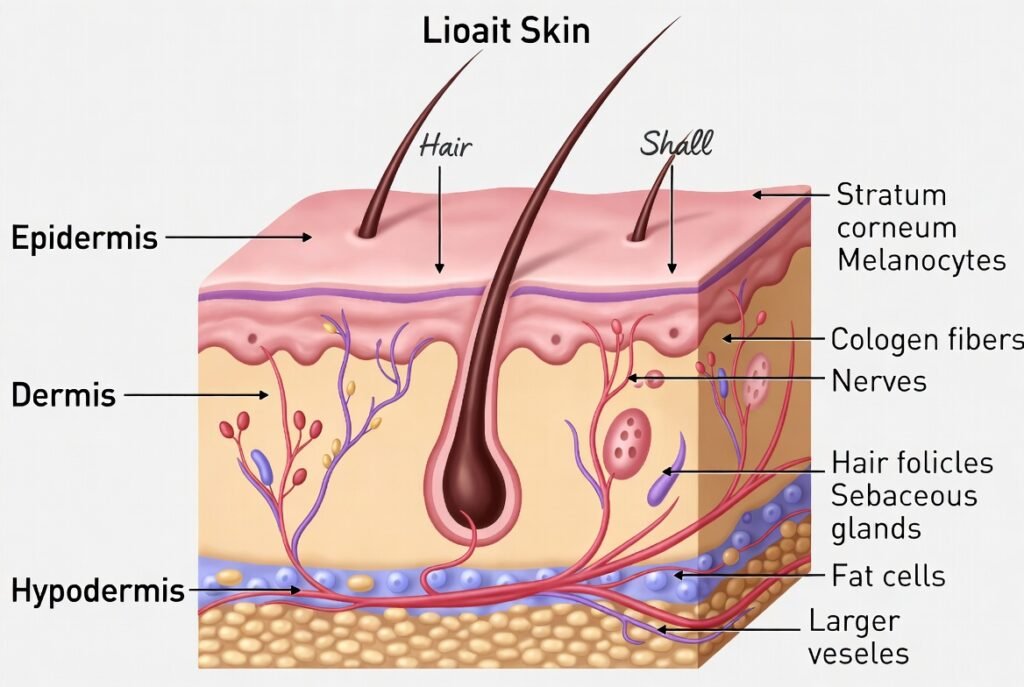
Epidermis
Contains the stratum corneum — a brick-and-mortar structure where ceramides act as mortar, binding cells and preventing water loss.
Dermis
Houses collagen and elastin plus sebaceous glands, whose overactivity is often linked to acne.
Hypodermis
Fat cells providing insulation and cushioning. Volume loss here is why skin appears to sag with age.
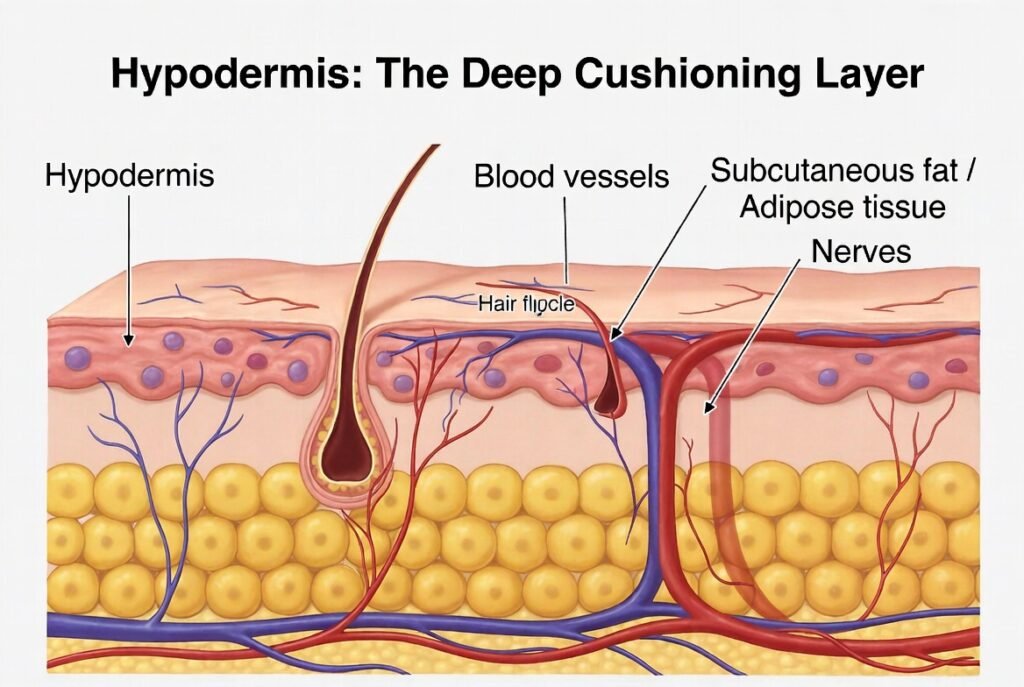
- Protects against bacteria and environmental damage
- Prevents excessive water loss (TEWL)
- Regulates body temperature
- Supports immune defense
- Provides sensation through nerve endings
Why Skin Problems Happen
Internal Factors
Genetics and Skin Type
Your genetic makeup determines your skin type and affects collagen production and predisposition toward acne or rosacea.
Hormonal Changes
Hormones influence sebum production, inflammation, and hydration. Breakouts often occur during puberty, menstrual cycles, pregnancy, or menopause.
Aging
Collagen production slows, cells renew more slowly, oil production decreases, and moisture retention declines — resulting in thinner skin and slower recovery.
External Factors
Sun Exposure
UV radiation is one of the leading causes of premature aging, uneven pigmentation, and long-term skin damage. Daily sunscreen is the most evidence-backed preventive step.
Pollution
Urban pollutants generate free radicals that damage skin cells and accelerate aging. Antioxidants like vitamin C help neutralize this daily oxidative stress.
Harsh Cleansing
Over-cleansing strips natural oils and disrupts the protective barrier — often causing the very problems you’re trying to solve.
The Skin Barrier: Your Protective Shield
The skin barrier contains ceramides, cholesterol, fatty acids, and natural moisturizing factors. Ceramides alone make up roughly half of the outer skin layer, acting as the mortar that holds everything together.
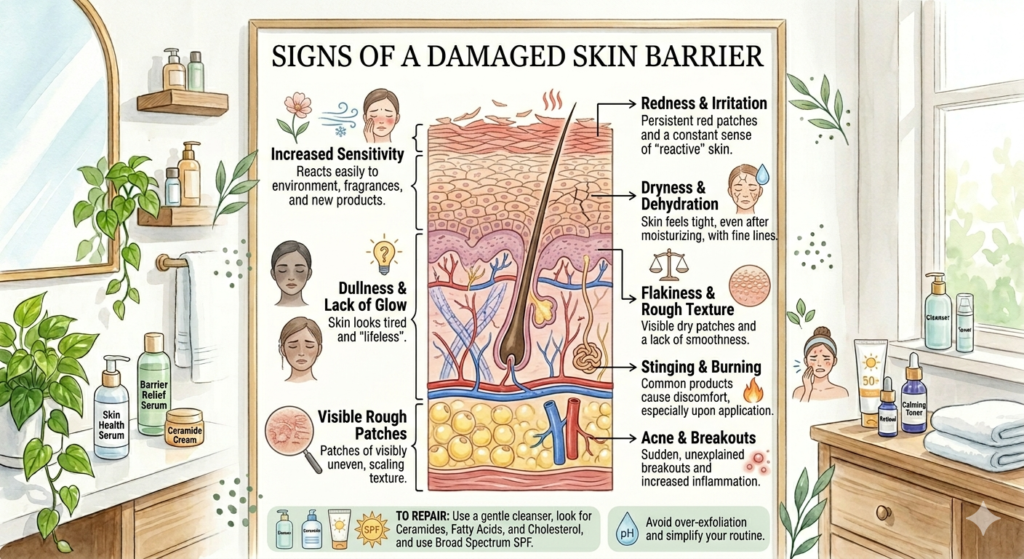
- Dryness — skin loses water and becomes rough
- Sensitivity — products cause burning or stinging
- Flaking — uneven texture from reduced moisture
- Tight feeling — discomfort after cleansing
- Increased irritation — stronger reactions to environment
Too Many Actives
Excessive use of retinoids, acids, and vitamin C may overwhelm skin and break down the barrier’s protective structure.
Over-Exfoliation
Daily harsh exfoliation, combining multiple acids, and aggressive scrubbing all cause cumulative barrier damage.
Wrong Products
Using products designed for another skin type creates problems. The best routine starts with your current skin condition.
- 1Gentle Cleansing
Mild, non-foaming formulas, fragrance-free. Removes impurities without stripping natural oils.
- 2Ceramides
Essential skin lipids that restore barrier integrity and reduce water loss.
- 3Glycerin
A humectant that attracts water from the air. Suitable for all skin types.
- 4Hyaluronic Acid
Maintains water content at multiple layers. Works best on damp skin sealed with moisturizer.
- 5Niacinamide
Supports barrier function, reduces uneven skin appearance, calms redness.
Acne: Why Breakouts Happen
Acne develops when hair follicles become blocked with oil, dead skin cells, and other factors contributing to inflammation. It is not caused by dirty skin — harsh cleansing can actually make it worse.
Salicylic Acid (BHA)
Removes buildup inside pores, improves texture, and reduces the appearance of clogged pores.

Benzoyl Peroxide
Introduces oxygen into pores, reducing acne-contributing bacteria. Lower percentages are equally effective with less irritation.

Niacinamide
Reduces pore size, controls oil, and calms redness without the irritation of stronger actives.

- Too many actives at once — disrupts barrier
- Skipping moisturizer — acne skin still needs hydration
- Over-exfoliating — max 2–3x per week
- Picking or popping — increases scarring risk

Dry Skin: Understanding Moisture Loss
Restore barrier structure and prevent water loss.
Draws moisture into skin. Lightweight, suitable for all types.
Improves softness and reduces moisture loss.


Sensitive Skin: When Skin Becomes Reactive
Sensitivity is often not permanent — it can develop because the barrier has weakened. A simplified routine can help it recover.
- 1Gentle Cleanser
Fragrance-free, low-foam. Avoid SLS sulfates.
- 2Simple Moisturizer
Fragrance-free with ceramides, glycerin, or squalane.
- 3Daily Sunscreen
Mineral formulas are better tolerated by sensitive skin.
- 4Limited Actives
One new active at a time, at least a week apart.
Uneven Skin Tone & Dark Spots
Caused by sun exposure, post-acne marks, and hormonal changes. First step: protect with sunscreen.
Vitamin C
Antioxidant that may improve dull-looking skin. The Sunday Riley C.E.O. Glow Face Oil is a brightening option built around this ingredient.

Retinoids
Support skin renewal, smoother texture, and improved dark spots over consistent use.
Aging Skin: Supporting Healthy Skin Over Time
Retinol & Retinoids
Among the most researched anti-aging ingredients. Introduce gradually — every third night, then every other, before nightly use.

Sunscreen
The single most effective anti-aging step. See the Dermalogica Dynamic Skin Recovery SPF50 review.

Peptides
See our guide to copper peptides and Matrixyl for product picks.


Skincare Ingredients Explained
Hydrating Ingredients
Hyaluronic Acid
Holds many times its weight in water. Apply to damp skin and seal with moisturizer.
Glycerin
Attracts water, improves hydration, suitable for dry and sensitive skin.
Barrier Repair Ingredients
Ceramides
Maintain skin barrier structure. First-choice for dry, sensitive, and damaged barriers.
Cholesterol & Fatty Acids
Work together with ceramides to maintain barrier strength.
Treatment Ingredients
Retinoids
Start every third night, use moisturizer support, wear daily sunscreen.
Vitamin C
Best in morning routines for antioxidant protection.
Exfoliating Acids
Choose AHA (texture, dullness) or BHA (pores, oily skin).

Alpha Hydroxy Acids (AHAs)
Glycolic and lactic acid. Best for texture, smoothness, and dullness.

Beta Hydroxy Acid (BHA)
Salicylic acid. Oil-soluble, penetrates pores to clear congestion.

Ingredient Cheat Sheet

| Ingredient | Main Benefit | Best Skin Type | When to Use |
|---|---|---|---|
| Ceramides | Barrier repair | Dry, sensitive, damaged | AM & PM |
| Hyaluronic Acid | Hydration | All skin types | AM & PM |
| Niacinamide | Barrier + oil balance | Oily, acne-prone | AM & PM |
| Salicylic Acid (BHA) | Pore clearing | Oily, congested | PM (start 2–3x/week) |
| Glycolic/Lactic (AHA) | Texture & dullness | Normal, combination | PM (start 2–3x/week) |
| Vitamin C | Antioxidant & brightening | Dull, uneven tone | AM only |
| Retinoids | Renewal & anti-aging | Most types | PM only |
| Peptides | Firming & collagen support | Aging skin | AM or PM |
| Sunscreen SPF 30+ | Damage prevention | Everyone, daily | AM (final step) |
⭐ The Golden Rule of Active Ingredients
More active ingredients do not automatically mean better results. Choose the right ingredient, use the correct frequency, allow skin time to adjust, and maintain barrier health.
The strongest skincare routine is the one your skin can tolerate and you can follow consistently.
Frequently Asked Questions
A mildly disrupted barrier can feel more comfortable within one to two weeks. More significant damage often takes four to six weeks of a simplified routine before fully stabilizing.
Thinnest to thickest: cleanser → treatment serums → hyaluronic acid → moisturizer → sunscreen (last step every morning).
Separate them: vitamin C in the morning, and retinoids at night. Using both together can increase irritation risk.
One or two targeted actives alongside cleanser, moisturizer, and daily sunscreen is usually enough. Add one at a time, spaced about a week apart.
Often not. In many cases sensitivity reflects a temporarily weakened barrier that can improve with barrier-supporting habits.
Yes. UV exposure accumulates through windows and is one of the leading causes of premature skin aging.
Final Verdict 🧬
Healthy skin is not built on trends or buying more products. It comes from understanding your skin’s structure, protecting and supporting skin barrier repair, and choosing a small set of evidence-based ingredients you can use consistently.
Start with the basics — gentle cleansing, barrier support, and daily sunscreen — before adding targeted treatments.
Ready to put this blueprint into action? Start with the barrier-repair step that matches your skin’s biggest concern right now.
Related Reading on 4Zonez.com
Tags: skin barrier repair, science-based skincare routine, ceramides for dry skin, niacinamide benefits, sensitive skin care, acne ingredients guide, anti-aging skincare 2026, skin health blueprint